01
Trelyqo calculates state
Readiness, approvals, dates, dependencies, ownership and policy state are maintained by the product.
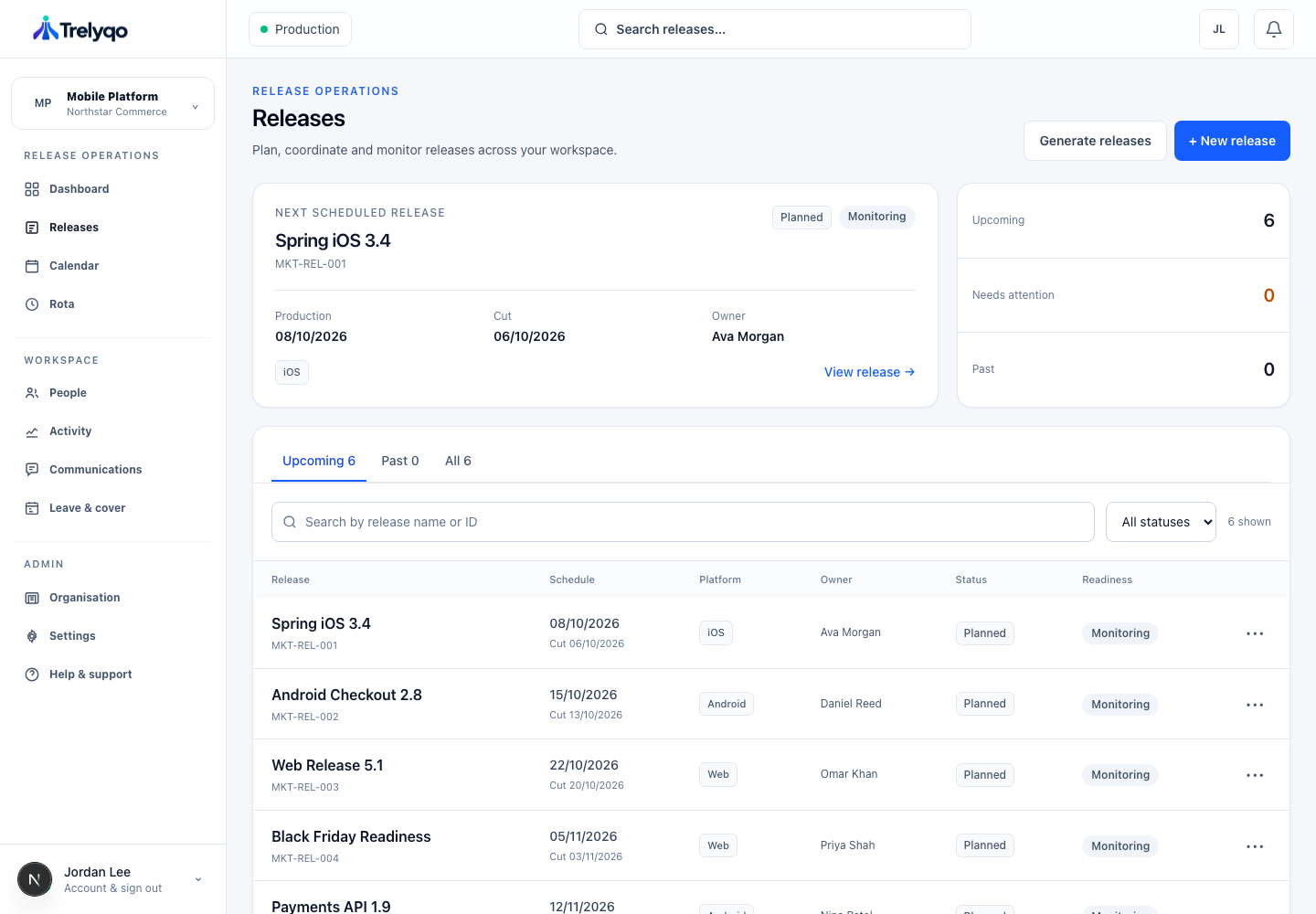
Release Commander interprets the operational state already held in Trelyqo, explains material risks and points teams toward the next governed action.
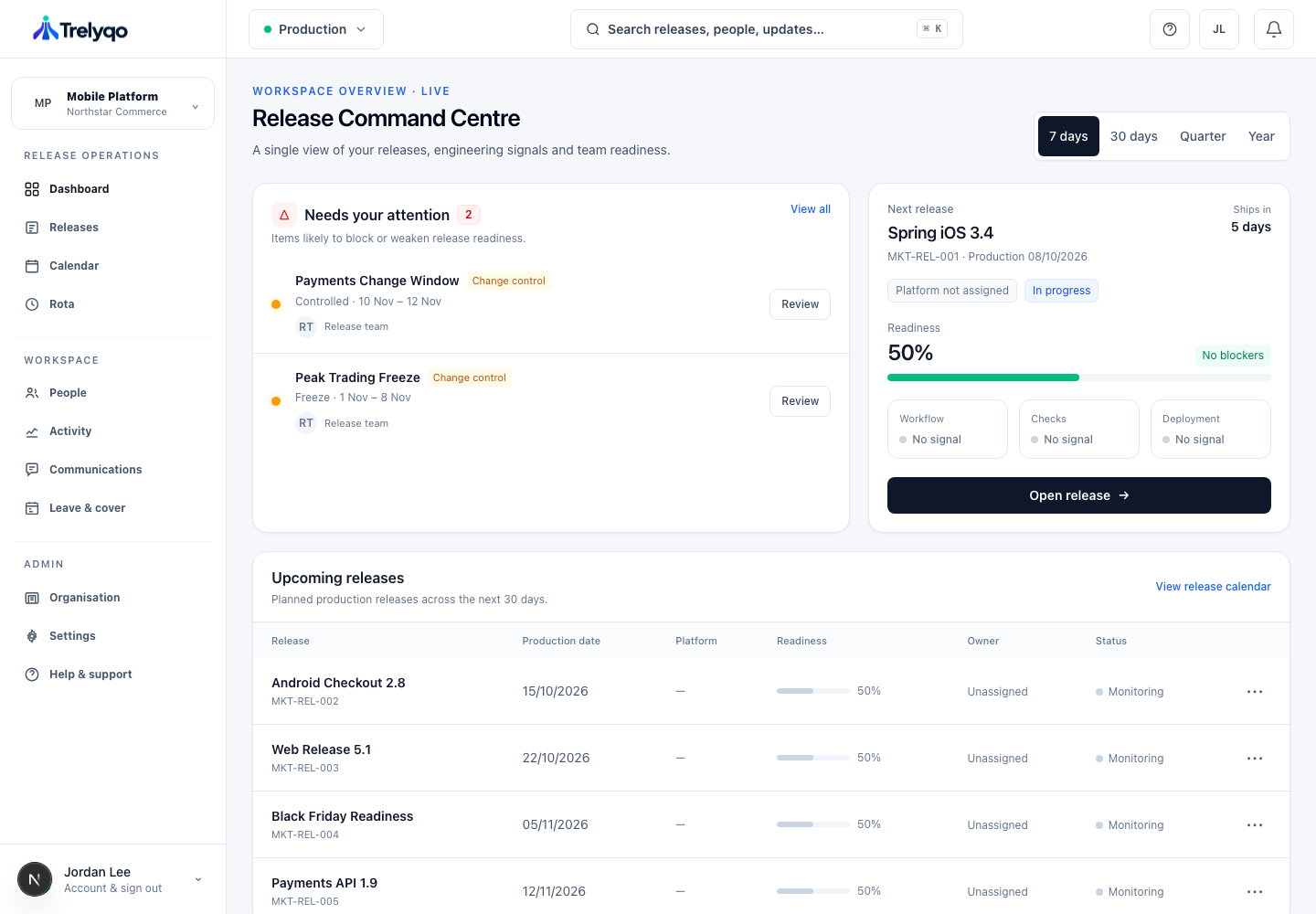
Trelyqo keeps ownership, readiness, permissions, audit and governance deterministic. Release Commander uses that operational context to explain what deserves human attention.
Readiness, approvals, dates, dependencies, ownership and policy state are maintained by the product.
AI explains the signals together, reduces noise and identifies what appears operationally significant.
Owners and teams make the decision. Trelyqo records the operational change and preserves the history.
It can reason across release state, readiness, people, ownership, dependencies and operational history because those signals already exist in Trelyqo.
Turn readiness, dependencies, ownership and timing signals into a concise explanation of what changed and why it matters.
Reduce release noise to the few items that materially need attention before the release window opens.
Explain release state in operational language without replacing the deterministic checks underneath it.
Connect a risky dependency to the release, owner and timing context around it.
Summarise what changed across release operations so teams can start from the important changes rather than reconstructing status.
Help teams draft concise release updates from the state already held in Trelyqo.
Owner and Admin controls can turn Trelyqo Intelligence off. When disabled, no AI inference or paid AI usage occurs.
Release management, readiness rules, rota, dependencies, change control and audit remain normal product capabilities.