Access control
Trelyqo uses authenticated access and a customer-facing role model built around Owner, Admin and Engineer responsibilities.
Trelyqo approaches security through authenticated access, scoped workspaces, explicit roles, auditable changes, controlled integrations and organisation-level settings.
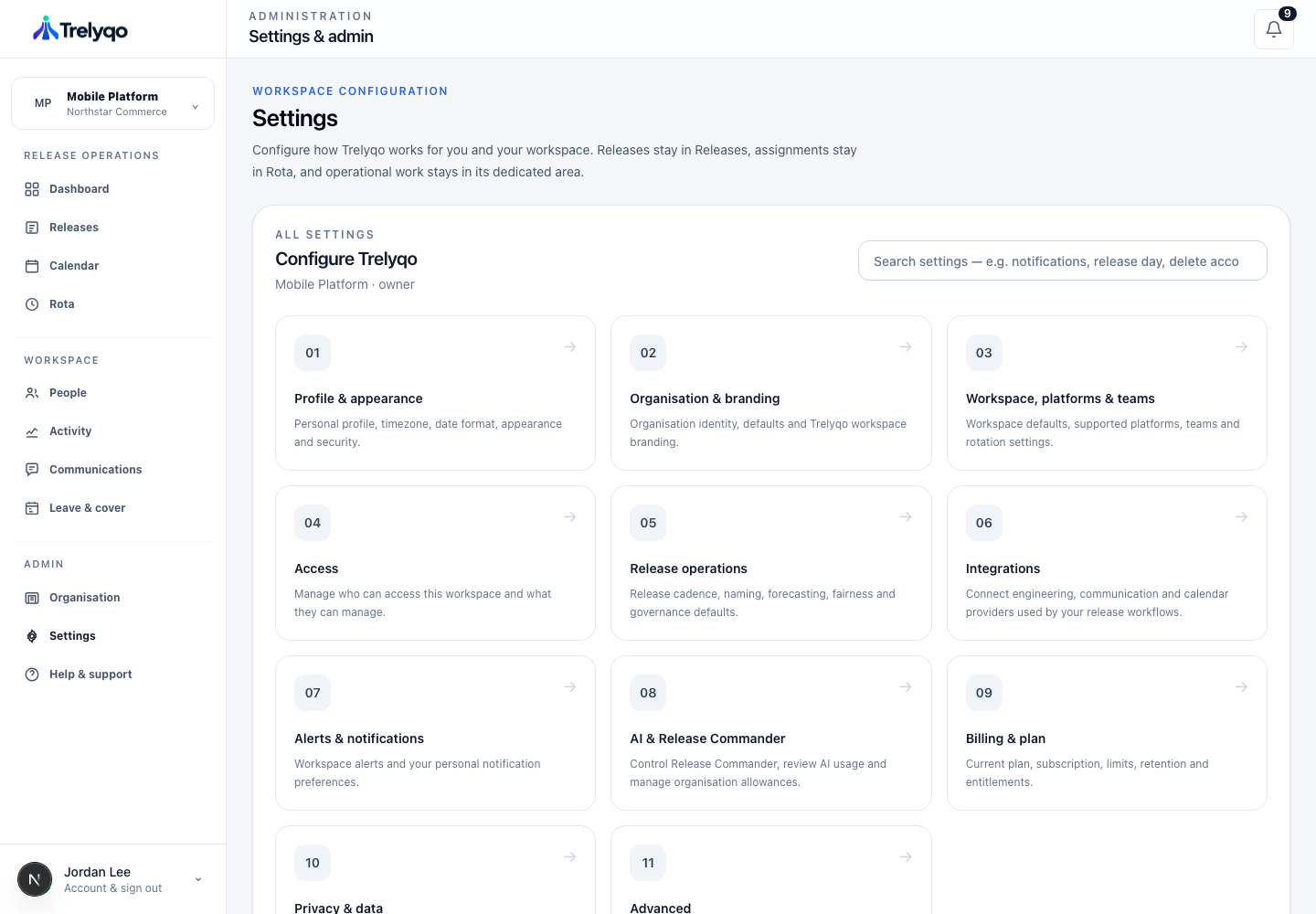
Trelyqo uses authenticated access and a customer-facing role model built around Owner, Admin and Engineer responsibilities.
Organisation and workspace context are part of the application model so operational data can be scoped to the appropriate tenant and workspace.
Material operational and administrative changes can be recorded so teams can understand who changed what and when.
Connected services use controlled integration flows, keeping sensitive integration configuration separate from ordinary release content.
Owner/Admin controls can disable Trelyqo Intelligence at organisation level so AI inference and paid AI usage stop while disabled.
Production uses controlled deployment procedures, health checks and application-level safeguards as part of Trelyqo's release process.
Customers remain responsible for administrator decisions, user access, credentials, connected systems, endpoint security and the data they choose to put into Trelyqo.
Review Trelyqo's Privacy Notice, DPA, subprocessors and Terms for contractual and data-processing detail.