A readiness review has value only when it helps a team decide what to do next. If it simply repeats a list of completed and incomplete items, it becomes reporting rather than operational control.
Useful readiness gives the team an early view of release risk and makes the next decision obvious.
Define what changes a release decision
Teams should be explicit about which conditions can delay, block or require approval for a release. That makes readiness consistent instead of dependent on whoever happens to be in the meeting.
- A critical dependency has not completed.
- Required sign-off is missing.
- The release owner or approved cover is unavailable.
- A known risk exceeds an agreed threshold.
Track movement, not only a percentage
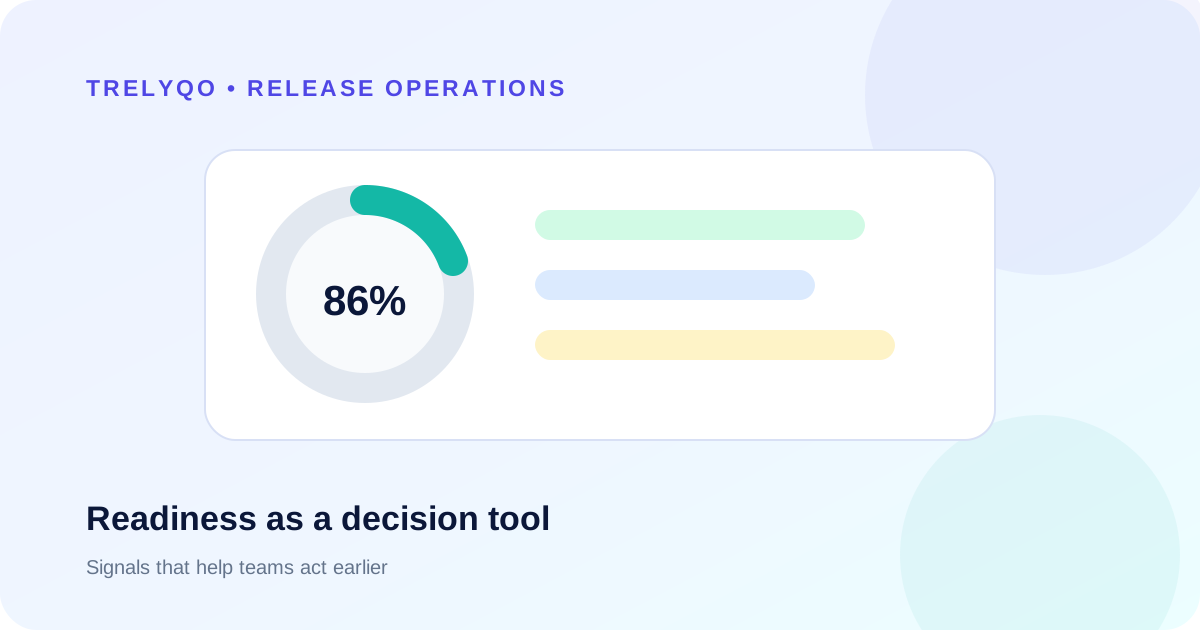
A single readiness percentage can hide useful detail. The direction of travel matters: what moved since the previous check, what is newly blocked and which items are approaching their decision deadline?
Put ownership next to every exception
Every meaningful readiness exception should have an owner. Without ownership, teams create visibility without creating action.
Make the final review boring
A strong readiness process makes the final release review predictable. Most issues have already been surfaced, assigned and resolved or consciously accepted.