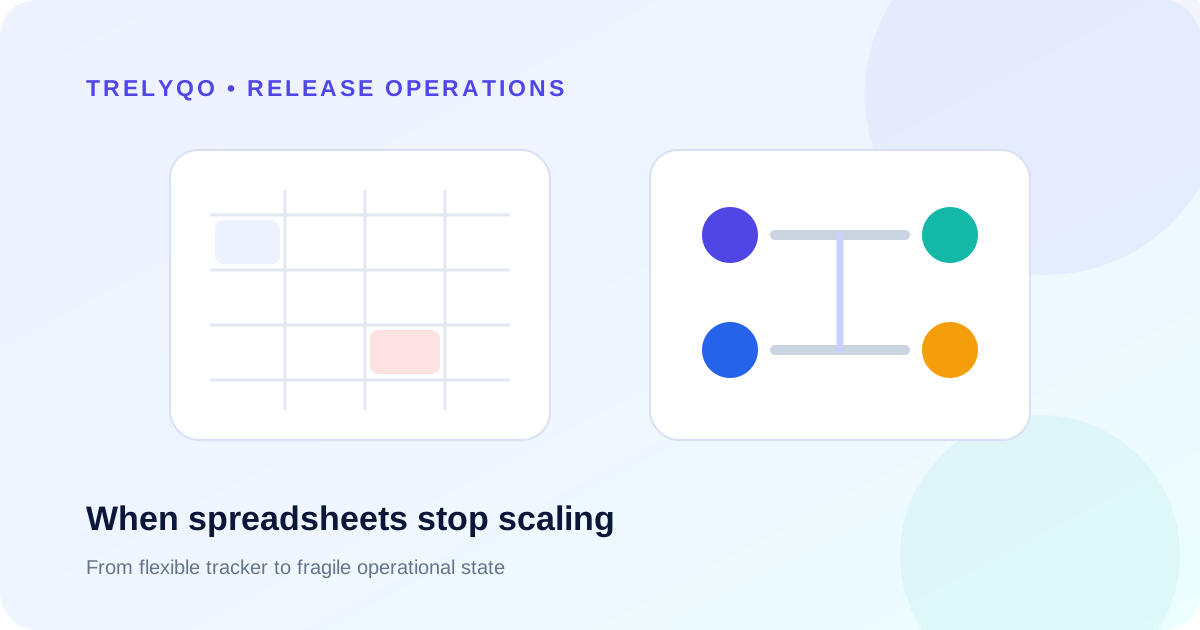
Spreadsheets are often where release processes begin. They are quick, flexible and familiar. For a small team and a simple process, that can be enough.
The difficulty appears when the spreadsheet becomes responsible for live operational state rather than simple planning.
Multiple truths appear
A rota may live in one sheet, absence in another, release readiness somewhere else and decisions in chat. Each source can be individually correct while the overall picture is out of date.
Automation becomes hidden logic
As formulas, scripts and exceptions grow, only a few people understand how the spreadsheet arrives at an answer. That makes operational changes harder to trust.
History is difficult to interpret
Version history can tell you that a cell changed, but it rarely gives a clean operational narrative of ownership changes, overrides, cover or approval decisions.
Know when to move beyond the spreadsheet
A spreadsheet is not a failure. It is often proof that the team has found a valuable workflow. The right time to move is when maintaining the workflow starts to require more coordination than the workflow saves.